
David Baddiel: From British Comedy and Three Lions to Books and Broadcasting

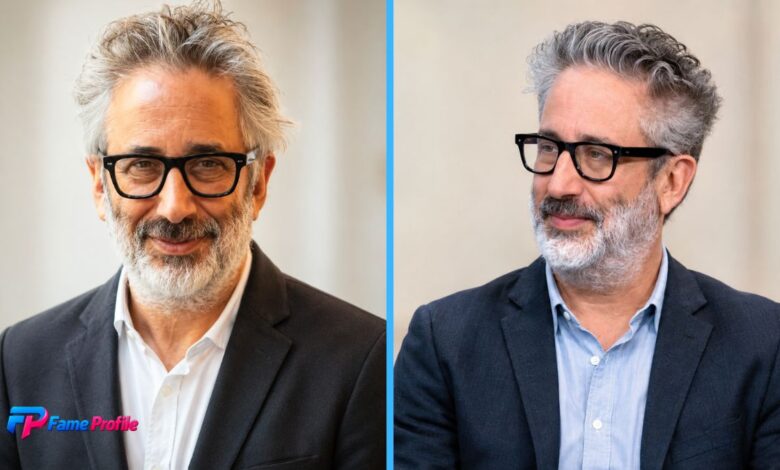
David Baddiel has built a career that is unusually difficult to reduce to a single label. The English comedian, author, screenwriter and broadcaster first became a major television figure during British comedy’s early-1990s boom, later helped create one of England football’s most enduring songs, and then established a substantial second career as a novelist, children’s writer, documentary maker and memoirist. More than three decades after his breakthrough, Baddiel remains active across television, radio and publishing. His 2026 projects, including David Baddiel: Cat Man and the BBC Radio 4 series Sixty Years of Hurt, show how far his work has expanded beyond the comedy partnerships that originally made him famous.
David Baddiel at a Glance
| Field | Information |
|---|
| Full name | David Baddiel |
| Born | 1964, Troy, New York |
| Raised | North-west London, England |
| Profession | Comedian, author, screenwriter, television and radio presenter |
| Education | English at King’s College, Cambridge |
| Major television work | The Mary Whitehouse Experience, Fantasy Football League, Baddiel & Skinner Unplanned |
| Notable song | Three Lions, with Frank Skinner and The Lightning Seeds |
| Selected books | The Parent Agency, Jews Don’t Count, The God Desire, My Family: The Memoir |
| Recent work | David Baddiel: Cat Man and Sixty Years of Hurt |
Baddiel was born in New York state in 1964 but was brought to Britain as a baby and grew up in north-west London. He later studied English at King’s College, Cambridge, graduating with a double first. He began postgraduate study at University College London before moving towards comedy as a full-time career.
How David Baddiel Became Part of the 1990s Comedy Boom
Baddiel’s rise was closely connected to a generation of British comedians who moved from university performance, radio and the alternative comedy circuit into mainstream television. One of his defining early projects was The Mary Whitehouse Experience, where he worked alongside Rob Newman, Steve Punt and Hugh Dennis. The programme helped establish Baddiel and Newman as a recognisable comedy partnership before they moved on to Newman and Baddiel in Pieces.
Their success became particularly clear in December 1993. Newman and Baddiel performed at Wembley Arena before approximately 12,000 people, an extraordinary venue for stand-up comedy at the time. Contemporary reporting described them as the first comedy act to play the arena, illustrating how the idea of comedians as something approaching rock stars had taken hold around the pair.
That partnership did not continue, but Baddiel soon entered another major phase of his career alongside Frank Skinner. Their football-centred television programme, Fantasy Football League, combined comedy, football discussion, sketches, and the irreverent tone associated with much British entertainment of the decade. It also placed Baddiel directly within football culture, setting up the project that would become one of the most durable parts of his public identity.
Why Three Lions Became Bigger Than a Tournament Song
For many people who rarely follow stand-up comedy or literary publishing, David Baddiel’s name is still most closely associated with Three Lions. Created for Euro 1996, the song brought together Baddiel and Skinner with Ian Broudie and The Lightning Seeds. Broudie wrote the music, while Baddiel and Skinner wrote the lyrics.
What distinguished the song from more conventional sporting anthems was its emphasis on disappointment as much as triumph. Rather than simply predicting victory, its lyrics reflected years of frustration and the persistent hope of England supporters. That emotional mixture allowed it to survive well beyond the tournament for which it was written.
The original recording reached number one in the UK, while a 1998 version also topped the chart. The song returned to number one during England’s 2018 World Cup run, setting an Official Charts record when the same artist line-up achieved a fourth separate spell at the summit with the song.
Its longevity is particularly significant because Baddiel’s career has continued in many other directions. Speaking to BBC Sport around the song’s 30th anniversary in 2026, he acknowledged that Three Lions may ultimately remain the work most closely attached to his name despite everything else he has created.
Moving from Television Comedy into Books and Personal Storytelling
Treating Baddiel simply as one half of two successful comedy partnerships misses much of his later career. He has written adult fiction, children’s novels, screenplays, non-fiction and memoir, while repeatedly returning to live performance.
His adult novels include Time for Bed, Whatever Love Means, The Secret Purposes and The Death of Eli Gold. He also wrote the screenplay for the 2010 comedy film The Infidel, which explored questions of Muslim and Jewish identity through comedy.
Children’s fiction became another significant part of his work. The Parent Agency began a run of books that included The Person Controller, AniMalcolm, Birthday Boy, Head Kid and other titles. Baddiel has explained that being a father influenced his move into children’s writing, allowing ideas from family conversations to become stories for younger readers.
The Parent Agency later moved from page to stage. A musical adaptation opened at Storyhouse in Chester in 2025, demonstrating the continuing life of a book first published more than a decade earlier. Baddiel’s official biography notes that the production completed a sold-out five-week run.
His return to stand-up has followed a similarly personal direction. Fame: Not the Musical examined celebrity, while My Family: Not the Sitcom turned his complicated family history into a stage performance. The latter received an Olivier Award nomination and was later followed by Trolls: Not the Dolls. His memoir My Family, published in 2024, developed many of the family stories that had already informed his stage work.
Identity, Antisemitism and More Serious Documentary Work
One of the clearest shifts in Baddiel’s public work has been towards cultural and social argument. His 2021 non-fiction book Jews Don’t Count examined what he sees as the inconsistent treatment of antisemitism within wider discussions about prejudice and minority representation.
The argument was subsequently developed into the 2022 Channel 4 documentary David Baddiel: Jews Don’t Count. Channel 4 reported an average audience of 1.2 million for the programme, which included conversations with figures such as Stephen Fry, Sarah Silverman and David Schwimmer.
Baddiel’s own earlier comedy also became part of that examination. During Fantasy Football League, he had impersonated Nottingham Forest footballer Jason Lee using blackface, and jokes centred on Lee’s appearance. Baddiel later acknowledged that the portrayal was racist. In the Jews Don’t Count documentary, he met Lee and apologised directly; Lee described the apology as overdue. Including that episode is important to understanding Baddiel’s public profile because his more recent discussions of prejudice have involved confronting harmful material from his own career rather than separating himself from it.
His subsequent non-fiction book The God Desire, published in 2023, approached belief and atheism from another personal angle. Together, these projects show how his later career has increasingly combined comedy with arguments about identity, faith, culture, memory, and public discourse.
What David Baddiel Is Doing in 2026
Baddiel remains an active broadcaster, not someone remembered primarily for 1990s television. In January 2026, Channel 4 broadcast the three-part series David Baddiel: Cat Man, built around his lifelong enthusiasm for cats. The programme mixed humour, personal interest and documentary-style encounters with owners, unusual cats and celebrity guests.
Football also returned to the centre of his work during the year. BBC Radio 4’s Sixty Years of Hurt with David Baddiel used the history of England’s men’s football team to examine broader questions about English identity, sporting expectation, culture and national mythology. The series involved contributors from comedy, football and cultural writing and was produced by BBC Studios Audio.
Those projects provide a useful picture of his career today. The subjects may range from cats to Englishness, antisemitism, family history and football, but the common thread is storytelling through a personal point of view. Baddiel himself has previously described storytelling as the connection between his different forms of work.
Family Context Without Losing Sight of the Work
Family has become increasingly visible in Baddiel’s writing because he has deliberately used his own experiences as creative material. He has two children, Dolly and Ezra, with actor and writer Morwenna Banks. His children have influenced both his writing for younger readers and his reflections on parenting, while his parents became central subjects of My Family: Not the Sitcom and My Family: The Memoir.
That context matters mainly because it explains how his work developed. His public output has increasingly shifted from observational comedy to autobiographical storytelling, turning family memories and personal contradictions into books, stage shows, and broadcasts.
Read this too: Jeffrey Craig LaBeouf: Shia LaBeouf’s Father, Former Clown and Honey Boy Inspiration
(FAQs)
What is David Baddiel most famous for?
David Baddiel became prominent through British television comedy, particularly The Mary Whitehouse Experience, his work with Rob Newman and later Fantasy Football League with Frank Skinner. He is also widely recognised as one of the lyricists and performers behind the England football anthem Three Lions.
Did David Baddiel write Three Lions?
Yes. David Baddiel and Frank Skinner wrote the lyrics to Three Lions, while Ian Broudie of The Lightning Seeds wrote the music. The song was originally released for Euro 1996 and has repeatedly returned to prominence during major England football tournaments.
Is David Baddiel also an author?
Yes. His published work spans adult novels, children’s fiction, non-fiction and memoir. Titles include The Parent Agency, The Person Controller, Jews Don’t Count, The God Desire and My Family: The Memoir.
What is David Baddiel doing in 2026?
His recent work includes the Channel 4 television series David Baddiel: Cat Man and the BBC Radio 4 series Sixty Years of Hurt, which examines England, football and national identity.
David Baddiel’s longevity comes partly from refusing to remain in the role that first made him famous. The comedian who emerged from the early-1990s television boom became a football-cultural figure through Three Lions, then a novelist, children’s author, memoirist and documentary presenter. His more recent work has also shown a willingness to examine identity, prejudice and mistakes from his own past. With new television and radio projects still appearing in 2026, his public career is better understood as an evolving body of comedy, writing and cultural commentary than as a single nostalgic chapter of British entertainment.




One Comment